

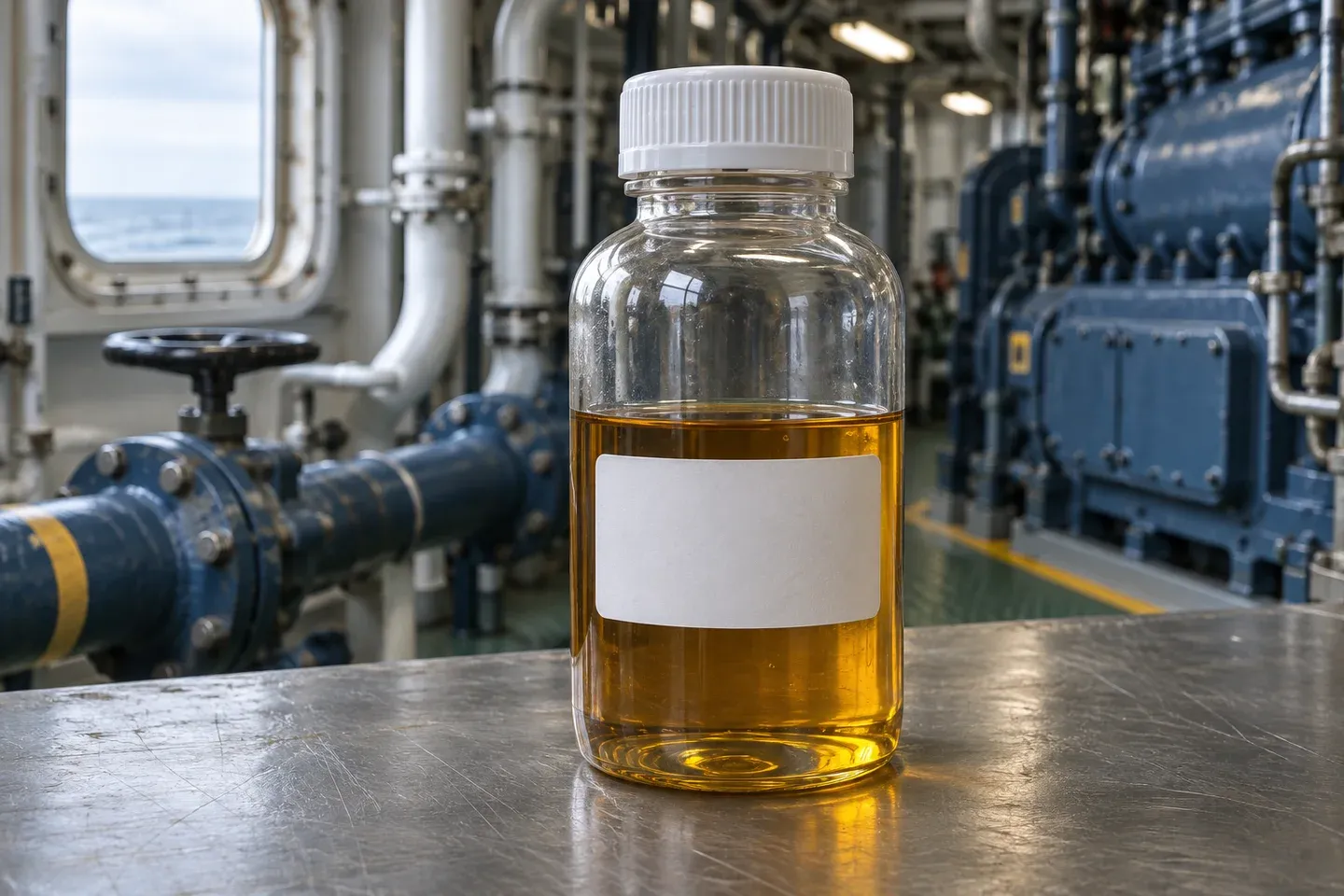
Can the lab identify the same machine twice?
A laboratory receives two bottles marked “auxiliary engine”. One came from the port generator and the other from the starboard unit. Without the equipment identifier, the analyst cannot confidently place either result alongside the correct history. Start the sample record with the vessel, unique machine name and sampling point used on board.
Use the laboratory’s sampling kit and the vessel’s approved sampling procedure. Complete the identification while the bottle and the machine record are together. Check that the bottle number also appears on the paperwork that will travel ashore.
Record what happened between samples
Give the product name, sample date, equipment running hours and oil service hours where known. Note recent oil additions, filter work or a change of oil. A major top-up between two samples gives an analyst a reason to ask how much fresh oil entered the system before interpreting a trend.
For example, a record might read “Generator 2, sample point G2-A, 8,420 machine hours, 640 oil hours, 35 litres added on 6 June”. The specific numbers belong to this example. On the ship, use the figures in the machinery and oil records.
Close the loop with the report
When the report arrives, match its sample identifier to the vessel’s retained record. Check the listed product and machine before comparing it with the previous result. If the report raises a question, the laboratory can then discuss the operating history with the engineer who knows that equipment. File the response beside the result for the next sampling round.